What is the best nutrient for hydroponic strawberries
The best nutrient for hydroponic strawberries is a custom-mixed, three-part dry salt formulation centered on Masterblend 4-18-38 combined with Calcium Nitrate (15.5-0-0) and Magnesium Sulfate. This specific formulation provides the precise high-potassium, moderate-nitrogen ratio required to prevent vegetative overgrowth while maximizing fruit yield and brix levels.
| Parameter | Vegetative Stage | Flowering & Fruiting Stage |
|---|---|---|
| Target pH Range | 5.8 – 6.0 | 6.0 – 6.2 |
| Electrical Conductivity (EC) | 1.0 – 1.4 mS/cm | 1.4 – 1.8 mS/cm |
| Nitrogen to Potassium (N:K) Ratio | 1 : 1.5 | 1 : 2.5 |
| Solution Temperature | 65°F – 68°F | 65°F – 68°F |
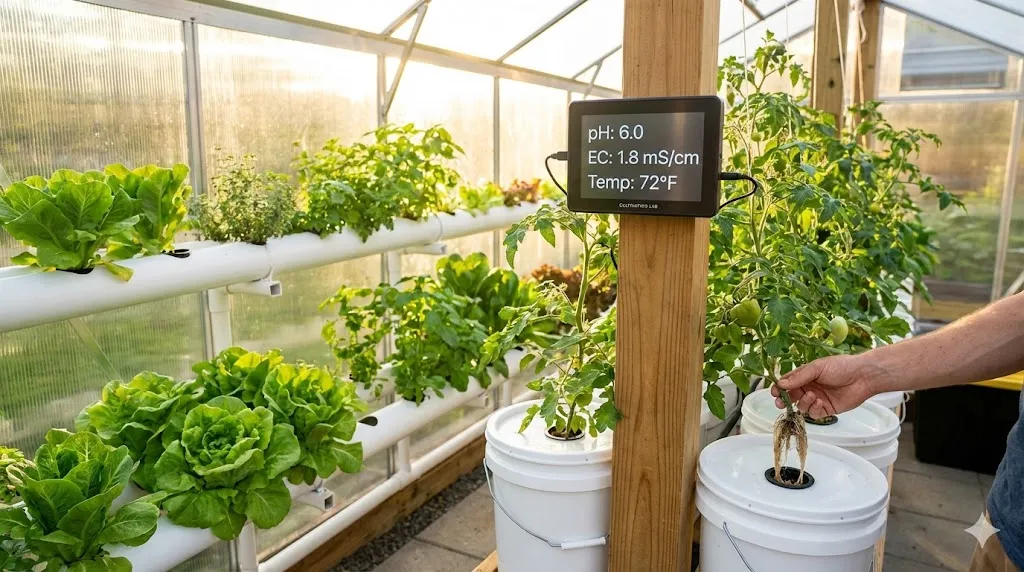
What is the Best Nutrient for Hydroponic Strawberries?
Strawberries are highly sensitive to electrical conductivity (EC) spikes and specific ion toxicities, particularly sodium and chloride. Commercially available liquid “grow and bloom” nutrients often contain excess nitrogen, driving explosive runner production at the expense of inflorescence development. Dry salt formulations, specifically the 4-18-38 base, allow growers to manipulate the nitrogen-to-potassium ratio independently of calcium and magnesium inputs. During the vegetative phase, strawberries demand a balanced profile to establish the crown and root architecture. Upon flower initiation, the potassium demand increases drastically to facilitate carbohydrate transport and cell expansion within the receptacle (the fruit).
Base Formulation Requirements
Achieving optimal yields requires dissecting the nutrient profile into distinct elemental components rather than relying on homogenized liquid pre-mixes. Maintaining distinct stock solutions prevents the precipitation of calcium sulfate (gypsum), which occurs when calcium nitrate and magnesium sulfate interact in high concentrations.
- Base Mix (4-18-38): Supplies foundational phosphorus, potassium, and essential micronutrients (iron, manganese, zinc, copper, boron, molybdenum) in chelated forms (EDTA/DTPA) to ensure bioavailability across a fluctuating pH gradient.
- Calcium Nitrate (15.5-0-0): The exclusive source of nitrogen. Calcium is highly immobile within the plant tissue; a continuous supply is biologically mandatory to prevent tip burn on emerging leaves and blossom end rot on developing fruit.
- Magnesium Sulfate (Epsom Salt): Provides magnesium, the central atom of the chlorophyll molecule, and sulfur, critical for the synthesis of volatile aromatic compounds that dictate the final flavor profile and brix index of the berry.
Preparation and Mixing Sequence
Adhere strictly to the following dilution sequence to maintain chemical stability in the reservoir. Never combine concentrated dry salts directly.
- Step 1: Dissolve the 4-18-38 base completely in reverse osmosis (RO) water heated to exactly 70°F.
- Step 2: Dissolve the Magnesium Sulfate completely into the same reservoir. Agitate until the solution is entirely clear and no particulate remains.
- Step 3: In a separate, smaller container, dissolve the Calcium Nitrate in RO water. Slowly inject this diluted solution into the main reservoir under continuous, heavy mechanical agitation.
Micronutrient and pH Management
Iron chlorosis is the most prevalent micronutrient deficiency in hydroponic strawberries, typically manifesting as severe interveinal yellowing on new crown growth. This is fundamentally a pH management failure rather than an absolute iron deficiency in the water. When the root zone pH exceeds 6.2, standard Iron EDTA becomes rapidly unavailable to the strawberry root system. Utilizing a nutrient base supplemented with Iron DTPA or EDDHA extends the bioavailability window up to a pH of 7.0, providing a critical buffer against unmonitored pH drift.
